
You don’t need to completely change your life to start taking better care of your health.
Sometimes, the most meaningful changes begin with small things you do every day — drinking enough water, moving your body, choosing nutritious foods, getting enough sleep, and taking time to relax.
Healthy living is not about being perfect. It’s about building simple habits that you can realistically continue over time.
In this article, we’ll explore 10 simple everyday habits that can support your overall health and wellbeing.
10 Healthy Habits to Start Today
- Drink enough water
- Eat a variety of nutritious foods
- Move your body regularly
- Get enough quality sleep
- Avoid sitting for long periods
- Limit excess added sugar
- Spend time outdoors
- Eat slowly and mindfully
- Make time to manage stress
- Focus on consistency rather than perfection
These habits aren’t a replacement for medical care, but they can form a strong foundation for a healthier lifestyle.
Your Health Is Built by Everyday Choices
When people think about improving their health, they often imagine major changes.
A strict diet.
An intense workout routine.
Completely changing their lifestyle overnight.
But healthy living doesn’t have to begin that way.
Many aspects of health are influenced by the choices we make repeatedly — what we eat, how much we move, how well we sleep and how we manage everyday stress.
The World Health Organization emphasizes that healthy living includes habits such as eating a healthy diet, staying physically active, getting enough sleep and avoiding tobacco.
The good news is that you don’t have to change everything at once.
Start small.
Choose one habit. Make it realistic. Repeat it consistently.
Then build from there.
Drink Enough Water
Water is essential for normal body function, and staying hydrated is a basic part of taking care of yourself.
Your body continually loses water through processes such as breathing, sweating and urination. Your fluid needs can also vary depending on factors such as activity, weather and individual circumstances.
Instead of waiting until you’re extremely thirsty, make drinking fluids a regular part of your day.
Simple Ways to Drink More Water
- Keep a water bottle nearby.
- Drink water with meals.
- Carry water when you go outside.
- Choose water instead of sugary drinks more often.
- Drink regularly throughout the day.
You don’t necessarily need complicated hydration routines. For most people, making water easily available is a simple place to start.
Practical Tip
Keep a reusable water bottle where you can see it.
Visibility makes the habit easier to remember.
Simple Ways to Drink More Water Practical Tip

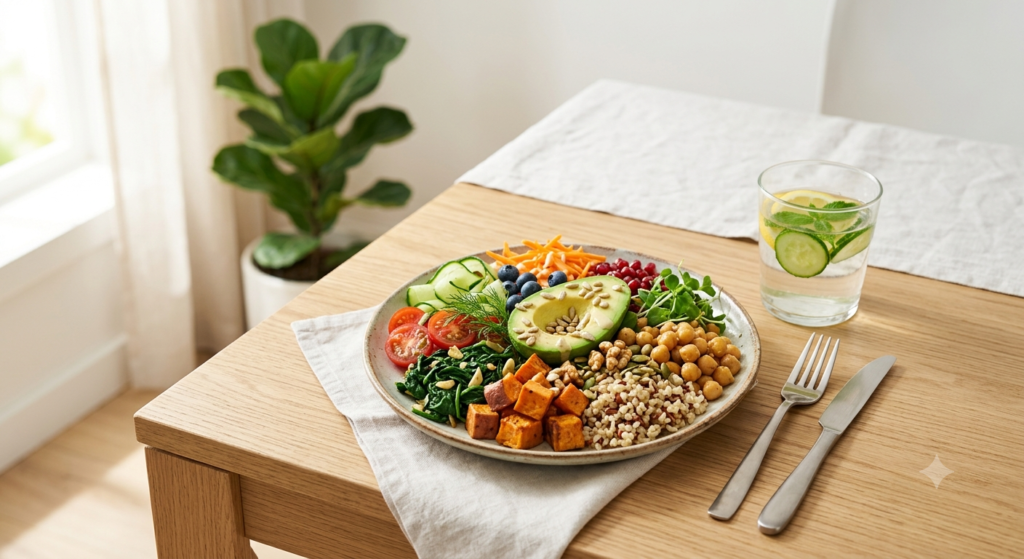
Eat a Variety of Nutritious Foods
Healthy eating doesn’t mean eating the same “superfood” every day.
Your body needs a variety of nutrients, and a healthy diet can include many different foods.
The World Health Organization recommends a varied diet that includes foods such as vegetables, fruits, legumes, nuts and whole grains.
Instead of focusing on one perfect food, think about variety and balance.
Try including:
- Vegetables
- Fruits
- Pulses and legumes
- Whole grains
- Nuts and seeds
- Appropriate sources of protein
- Nutritious dairy or alternatives, depending on your diet
You don’t have to completely eliminate your favorite foods either.
The goal is to make nutritious foods a regular part of your overall eating pattern.
Practical Tip
Try adding one extra vegetable or fruit to your meals each day.
Small additions can be easier to maintain than extreme diet changes.
Move Your Body Regularly
Your body is designed to move.
Physical activity doesn’t have to mean spending hours in a gym.
Walking, cycling, dancing, household activities, stretching and structured exercise can all contribute to physical activity.
For adults, the World Health Organization recommends at least 150–300 minutes of moderate-intensity aerobic physical activity per week, or an equivalent amount of vigorous activity, along with muscle-strengthening activities on at least two days each week.
But if you’re currently inactive, don’t feel pressured to achieve the full target immediately.
Even starting with small amounts of movement can be a useful step. Some physical activity is better than none.
Try simple movement opportunities:
- Take a short walk.
- Use stairs when practical.
- Stretch during breaks.
- Walk while talking on the phone.
- Try dancing at home.
- Spend less time sitting continuously.
Practical Tip
Start with a short daily walk and gradually build from there.
Consistency matters more than trying to do everything on day one.

Prioritize Good Sleep
Sleep isn’t simply “downtime.”
Your body and brain use sleep as an important part of normal functioning and recovery.
Poor sleep can affect how you feel during the day, while consistently getting adequate sleep is an important part of overall health.
Instead of treating sleep as something you can sacrifice whenever you’re busy, make it part of your daily routine.
Create a better sleep routine:
- Try to maintain a consistent bedtime.
- Keep your bedroom comfortable and quiet.
- Reduce stimulating activities before bed.
- Avoid using your phone endlessly when you’re supposed to be sleeping.
- Give yourself enough time to sleep.
Practical Tip
Create a simple wind-down routine 30–60 minutes before bedtime.
Dim the lights, put away unnecessary screens and allow your mind to transition toward sleep.

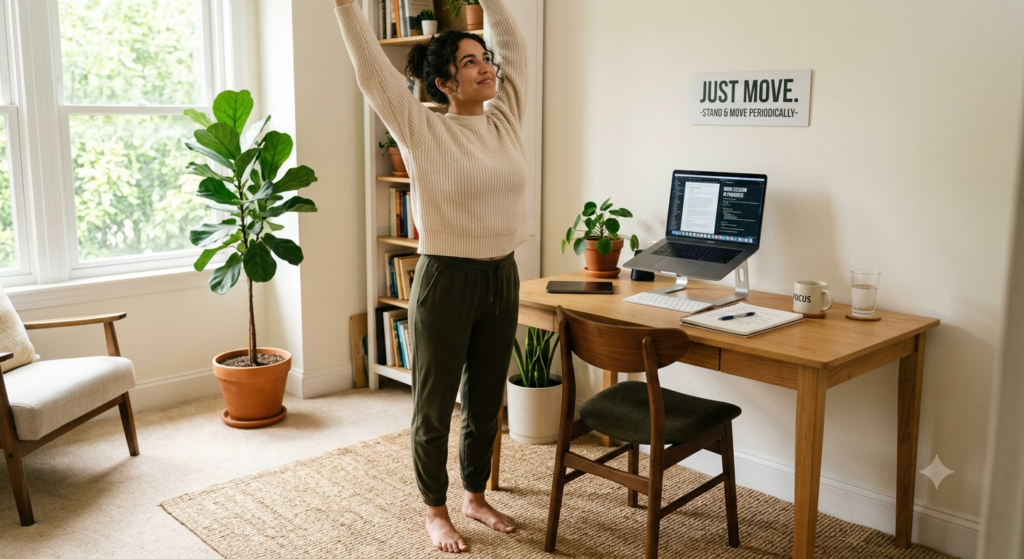
Avoid Sitting for Long Periods
Modern life can make sitting for hours feel completely normal.
You may sit while working, studying, watching television, using your phone or traveling.
The problem isn’t simply sitting down for a few minutes.
It’s allowing long periods of inactivity to become a routine.
The World Health Organization recommends reducing sedentary behavior and increasing physical activity throughout the day.
Try breaking up long periods of sitting:
- Stand up regularly.
- Walk around during breaks.
- Stretch.
- Take a short walk after meals when practical.
- Avoid spending an entire evening in one position.
Practical Tip
Set a reminder to stand and move periodically during long work or study sessions.
You don’t need a complicated routine.
Just move.
6. Limit Excess Added Sugar
Sugar isn’t automatically “bad,” but having large amounts of added or free sugars can make it harder to maintain a balanced diet.
Added sugars are sugars or syrups added during the preparation or processing of foods and drinks. Sugary drinks are one of the most common sources.
Common sources include:
- Soft drinks
- Sweetened beverages
- Desserts
- Candy
- Sweet snacks
- Some packaged foods
You don’t necessarily need to remove every sweet food from your diet. Instead, pay attention to how often and how much you consume.
Simple Swaps
- Sugary drink → Water
- Sweetened snack → Fruit or another nutritious option
- Frequent dessert → Occasional dessert
Reading nutrition labels can also help you become more aware of added sugars in packaged foods.
Practical Tip
Start with one simple change: reduce sugary drinks and choose water more often.

7. Spend Some Time Outdoors
Modern life can keep us indoors for much of the day.
Spending some time outdoors can give you an opportunity to move, take a break from screens and daily routines, and relax in a different environment.
You don’t need to spend hours outside. Even a short walk in a park, garden, or other comfortable outdoor space can be a simple way to add movement and a change of environment to your day.
Simple Ways to Spend More Time Outdoors
- Take a short morning or evening walk
- Sit outside during a break
- Spend some time in a garden or green space
- Take your phone-free break outdoors
- Combine walking with fresh air and a break from screens
Practical Tip
Instead of taking every break indoors, try making one short outdoor walk part of your daily routine.

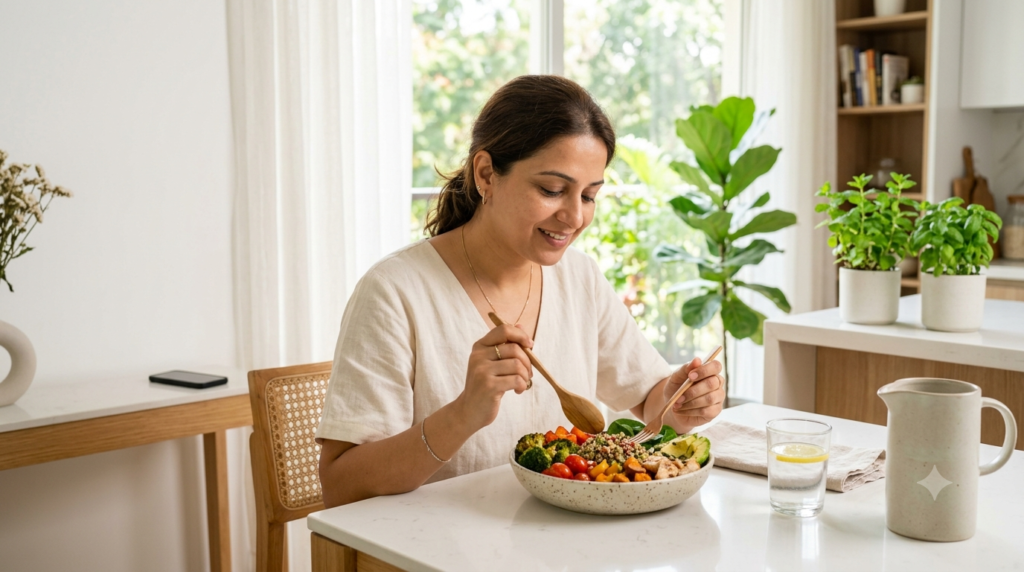
8. Eat Slowly and Mindfully
Healthy eating isn’t only about what you eat. How you eat can also matter.
When meals are rushed or eaten while distracted, you may pay less attention to the food and your body’s signals.
Try slowing down and giving your meal your full attention.
Simple Mindful Eating Habits
- Sit down while eating
- Don’t rush your meal
- Reduce distractions
- Put your phone away
- Notice the taste and texture of your food
- Pay attention to your hunger and comfortable fullness
You don’t need to make every meal a complicated process.
Practical Tip
Start with one screen-free meal each day and focus on eating slowly and enjoying your food.
9. Make Time to Manage Everyday Stress
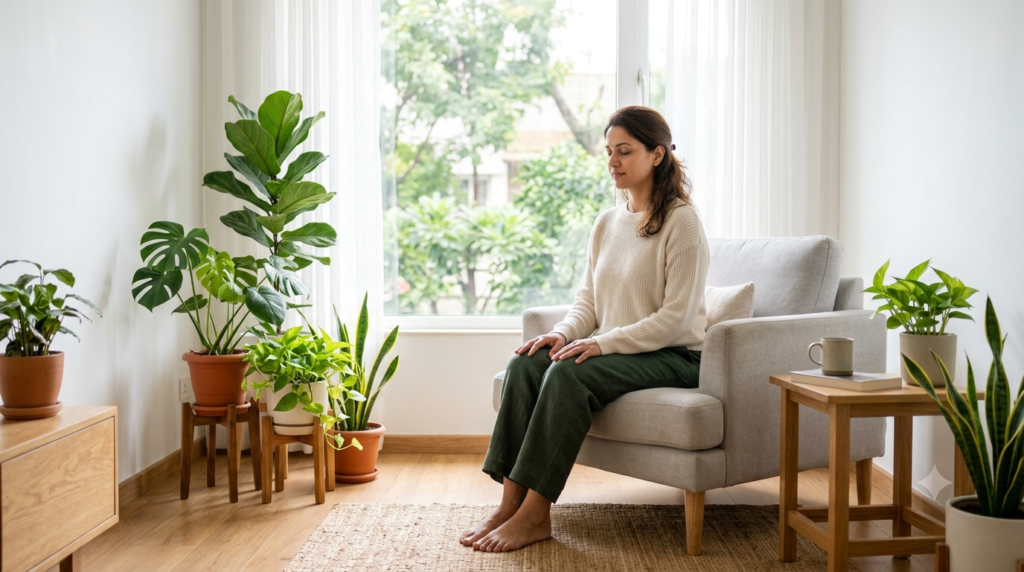
Stress is a normal part of life. Work, family responsibilities, finances, relationships, and everyday problems can all contribute to stress.
The goal isn’t to eliminate every stressful situation. Instead, finding healthy ways to manage everyday stress can help you take better care of your overall wellbeing.
Different strategies work for different people. You might try:
- Walking or exercising
- Slow breathing
- Spending time outdoors
- Listening to music
- Enjoying a hobby
- Talking with someone you trust
- Getting enough sleep
- Taking short breaks from work and screens
Practical Tip
Set aside 10–15 minutes each day without work or social media. Use that time to walk, breathe, stretch, listen to music, or simply relax.
If stress feels overwhelming, persistent, or difficult to manage, consider speaking with a qualified healthcare professional.
10. Focus on Consistency, Not Perfection
Perhaps the most important habit is learning to focus on consistency rather than perfection.
It is easy to become motivated and try to completely change your diet, exercise routine, sleep schedule, and daily habits all at once.
But if a routine becomes too difficult to maintain, it may be hard to continue.
Healthy living doesn’t have to be extreme.
A realistic habit that you can repeat regularly is often more practical than a perfect routine that lasts only a few days.
You don’t need to eat perfectly, exercise perfectly, or follow every healthy habit every single day.
What matters is the overall direction you are taking.
Practical Tip
Instead of asking:
“Did I do everything perfectly today?”
Ask:
“What is one healthy thing I can consistently do today?”

You Don’t Have to Change Everything at Once
Trying to change too many habits at the same time can feel overwhelming.
Instead, start with one small habit and give yourself time to make it part of your routine.
Start With One Small Habit
Week 1: Drink water regularly.
Week 2: Add a short daily walk.
Week 3: Create a more consistent bedtime routine.
Week 4: Add more fruits and vegetables to your meals.
Once one habit becomes easier, you can gradually build another.
Remember, healthy living isn’t about making your life complicated. It’s about creating small, realistic habits that you can continue over time.
Daily Health Checklist
Use this simple checklist as a reminder of the healthy choices you can make throughout the day.
☐ Drank water regularly
☐ Ate a variety of nutritious foods
☐ Included fruits or vegetables
☐ Moved my body
☐ Took breaks from sitting
☐ Allowed enough time for sleep
☐ Spent some time outdoors
☐ Took time to relax
☐ Limited excess sugary foods or drinks
☐ Did at least one thing for my wellbeing
You don’t need to check every box perfectly every day.
This checklist is a reminder, not a test. The goal is to gradually build healthier routines that fit your everyday life.
When Should You Talk to a Healthcare Professional?
Healthy habits can support general wellbeing, but they cannot diagnose or treat every health problem.
Consider speaking with a qualified healthcare professional if you experience:
- Persistent or worsening symptoms
- Unexplained changes in your health
- Significant changes in weight, sleep, or energy
- Concerns about an existing health condition
- Questions about medications
- Symptoms that worry you or interfere with your daily life
If you experience severe or potentially life-threatening symptoms, seek urgent medical care.
Healthy habits are an important foundation, but professional medical advice is still important when you need it.
Frequently Asked Questions
What are the most important healthy habits?
Some important habits include eating a variety of nutritious foods, staying physically active, getting enough quality sleep, drinking fluids regularly, avoiding prolonged sitting, managing stress, and avoiding tobacco.
Do I need to completely change my lifestyle to become healthier?
No. You don’t need to change everything at once. Starting with one small, realistic habit and building gradually can make healthy changes easier to maintain.
How much physical activity should adults get?
For most adults, the World Health Organization recommends at least 150–300 minutes of moderate-intensity physical activity per week, or an equivalent amount of vigorous activity. Muscle-strengthening activities are also recommended on at least two days per week.
Individual needs can vary, so people with health conditions or specific concerns should discuss appropriate activity with a healthcare professional.
Is healthy eating about avoiding all unhealthy foods?
Not necessarily. Healthy eating is more about your overall eating pattern, including variety, balance, nutritious foods, and moderation. You don’t necessarily have to completely eliminate every food you enjoy.
How can I start building healthy habits?
Start with one simple habit that is easy to remember and realistic for your daily routine. Once it becomes easier to maintain, gradually add another healthy habit.
Final Thoughts
Better Health Starts With Small Choices
You don’t need a perfect diet, an extreme workout routine, or a complete lifestyle transformation to start taking better care of yourself.
Sometimes, it begins with something very simple:
Drink more water.
Take a walk.
Add more vegetables to your meal.
Get enough sleep.
Take a few minutes to relax.
Then repeat those choices consistently.
Healthy living isn’t created by one perfect day. It’s built through the small choices you make repeatedly.
Learn Today. Live Better Tomorrow.
— THE ETERNAL FACTS

About THE ETERNAL FACTS
THE ETERNAL FACTS provides simple, practical health and wellness information designed to help readers understand their bodies and make more informed everyday choices.
Our goal is to make health information easier to understand and apply in everyday life.
Medical Disclaimer
The information provided on THE ETERNAL FACTS is intended for general educational and informational purposes only. It is not intended to replace professional medical advice, diagnosis or treatment.
Always consult a qualified healthcare professional regarding questions or concerns about your health.
Sources
This article is based on general health and wellness guidance from trusted public health organizations.
- World Health Organization (WHO) — Healthy Diet
- World Health Organization (WHO) — Physical Activity
- World Health Organization (WHO) — Guidelines on Physical Activity and Sedentary Behaviour
- Centers for Disease Control and Prevention (CDC) — Healthy Eating
Information is provided for general educational purposes and should not be considered a substitute for professional medical advice.