
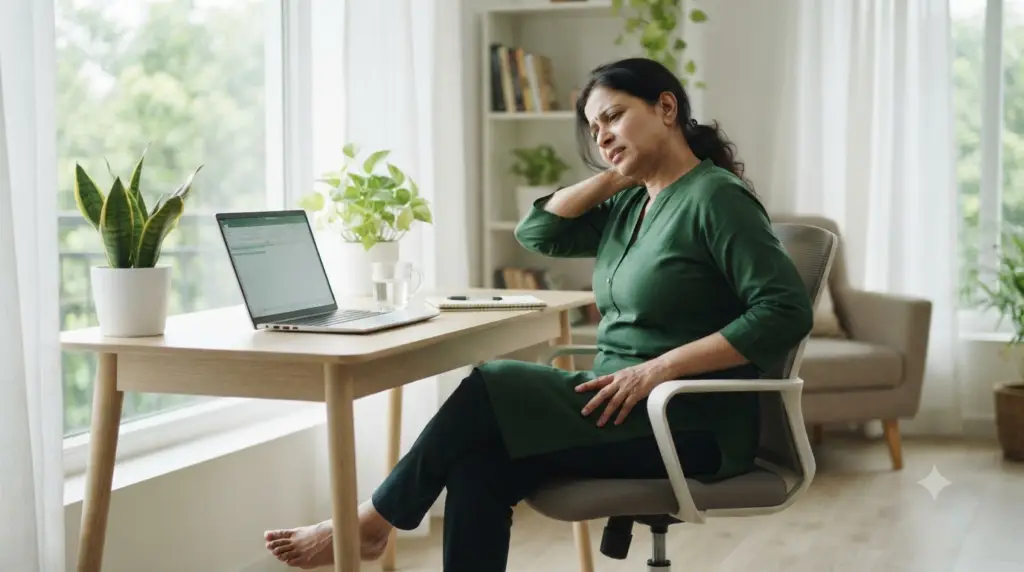
Why Sitting too long can affect your body
Sitting is a normal part of everyday life. We sit while working, studying, eating, driving, watching television, using our phones, and relaxing.
The problem is not simply sitting itself. Spending long periods sitting with very little movement can reduce how much your body is active throughout the day.
Over time, a sedentary routine may affect your muscles, posture, circulation, metabolism, and overall health.
The good news is that you don’t have to completely avoid sitting. Small movement breaks throughout the day can help you become more active and reduce the amount of uninterrupted sitting.
In this article, we’ll look at what can happen when you sit too long and simple ways to add more movement to your everyday routine.
What Happens When You Sit for Too Long?
When you remain seated for a long time, several parts of your body are doing very little work.
Your large leg and hip muscles are relatively inactive. Your posture may gradually become less ideal, especially if you’re working at a desk. You may also spend hours in the same position without realizing it.
This doesn’t mean that sitting for a short period is harmful.
The bigger concern is prolonged, uninterrupted sitting combined with low overall physical activity.
Effect on Your Muscles
1. Your Muscles Become Less Active
When you’re walking, climbing stairs, or standing, your leg and core muscles are working.
When you’re sitting, these muscles are much less active.
If you spend most of the day sitting, your body gets fewer opportunities to use these muscles.
Over time, regularly moving your body and doing strengthening activities becomes important for maintaining muscle function and physical fitness.
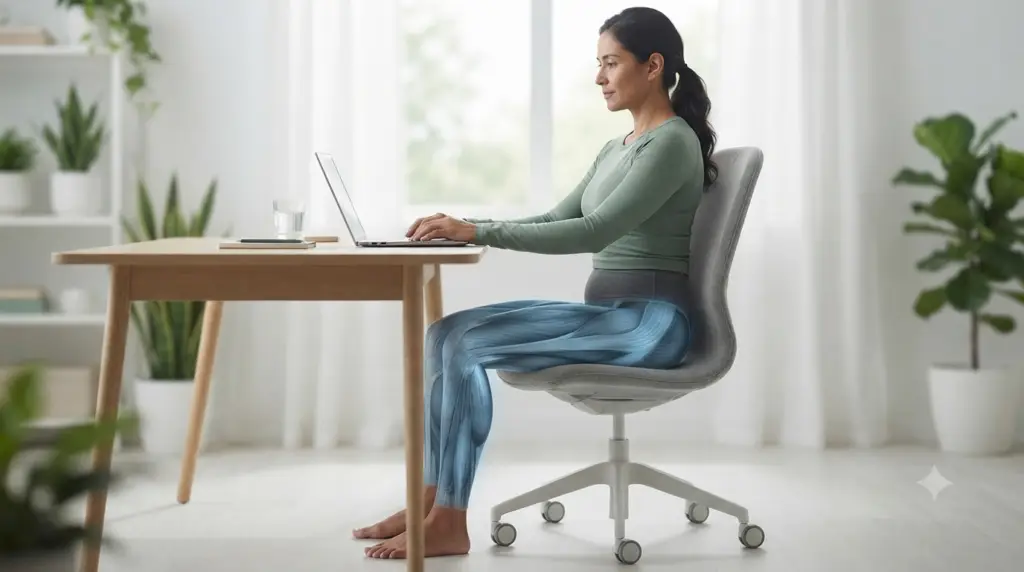
Sitting and Posture
2. It Can Affect Your Posture
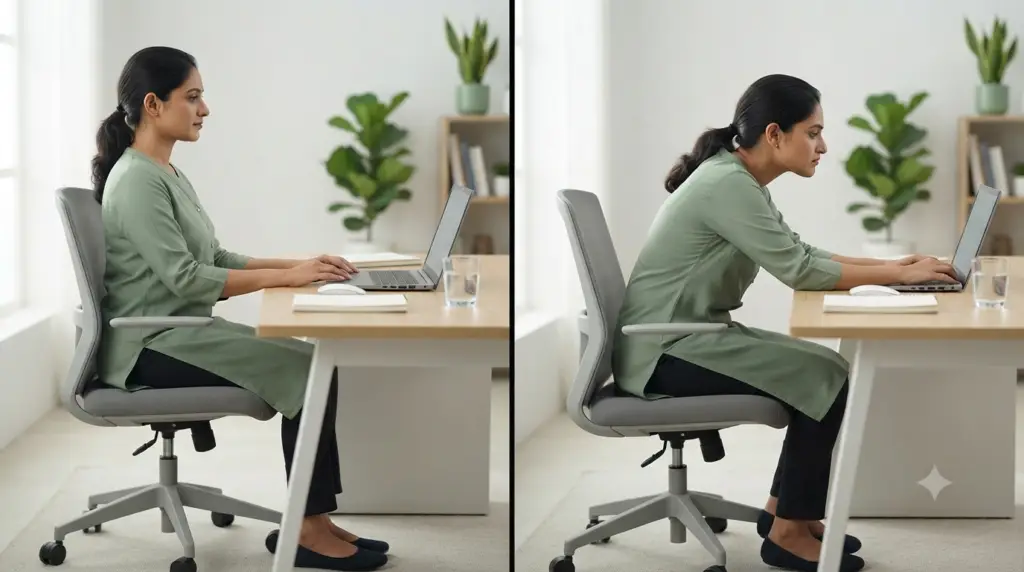
Have you ever started working with good posture but found yourself leaning forward or slouching later?
This is common during long periods of desk work.
Remaining in the same seated position for hours can contribute to muscle stiffness and poor posture habits. Looking down at a laptop or phone for long periods can also place additional strain on the neck and upper back.
Instead of trying to maintain one perfect posture all day, focus on changing positions regularly and setting up your workspace comfortably.
Blood Flow and Leg Discomfort
3. Your Legs May Feel Heavy or Stiff
When you sit for a long time without moving your legs, your muscles aren’t contracting as much as they do when you’re walking or standing.
After several hours, you may notice feelings such as:
- Stiff legs
- Tight hips
- General discomfort
- A heavy feeling in the legs
- The urge to stand and move
Getting up and walking around periodically gives your muscles a chance to become active again.

Sitting and Metabolism
4. It Can Reduce Your Daily Activity
Your body uses energy throughout the day.
Walking, standing, climbing stairs, doing household tasks, and exercising all require movement.
When much of your day is spent sitting, your overall daily movement may decrease.
This is one reason why exercise alone may not completely offset spending most of the rest of the day inactive.
Think beyond your workout.
Your everyday movement matters too.
Walking to another room, taking the stairs, doing household chores, or standing during certain activities can all help you become more active throughout the day.
Long Sitting and Overall Health
5. Too Much Sedentary Time Is Linked With Health Risks
Research has associated higher amounts of sedentary behavior with several health risks, particularly when people are also not physically active enough.
These include increased risks related to:
- Cardiovascular health
- Blood sugar regulation
- Weight management
- Physical fitness
- Overall health
This doesn’t mean that sitting for a few hours automatically causes disease.
Your overall lifestyle matters, including physical activity, diet, sleep, body weight, smoking, alcohol use, and other health factors.
The important message is simple:
Reduce unnecessary prolonged sitting and increase regular movement whenever you can.
Why Exercise Still Matters
Exercise Helps — But Don’t Stop There
If you exercise regularly, that’s excellent.
Walking, cycling, swimming, strength training, sports, and other physical activities can provide important health benefits.
But imagine exercising for 30–60 minutes and then spending the remaining hours of the day sitting.
That’s why it’s useful to think about both exercise and everyday movement.
Your goal doesn’t have to be constant activity.
Instead:
Exercise regularly + break up long periods of sitting + move more throughout the day.
Simple Ways to Sit Less
7. Try These Everyday Movement Habits
You don’t need expensive equipment or a complicated routine to reduce sedentary time.
Try these simple habits:
🚶 Stand Up Regularly
If you’ve been sitting for a long time, get up and move around.
🚶 Walk During Short Breaks
Take a short walk around your home, office, or building.
🪜 Use the Stairs
When practical and appropriate for you, choose stairs instead of an elevator.
📱 Move While Using Your Phone
Instead of always sitting while talking on the phone, stand or walk around when possible.
💻 Improve Your Workspace
Keep your screen at a comfortable height and arrange your chair and desk so you aren’t constantly leaning forward.
🏠 Move During Household Tasks
Cleaning, cooking, organizing, gardening, and other household activities can add movement to your day.
🏃 Exercise Regularly
Include activities that improve your cardiovascular fitness and muscle strength according to your abilities.
A Simple Rule to Remember
Don’t Let Sitting Become Your Whole Day
You don’t need to feel guilty every time you sit down.
Sitting is part of modern life.
The goal is to avoid spending long stretches of the day completely inactive.
A simple approach is:
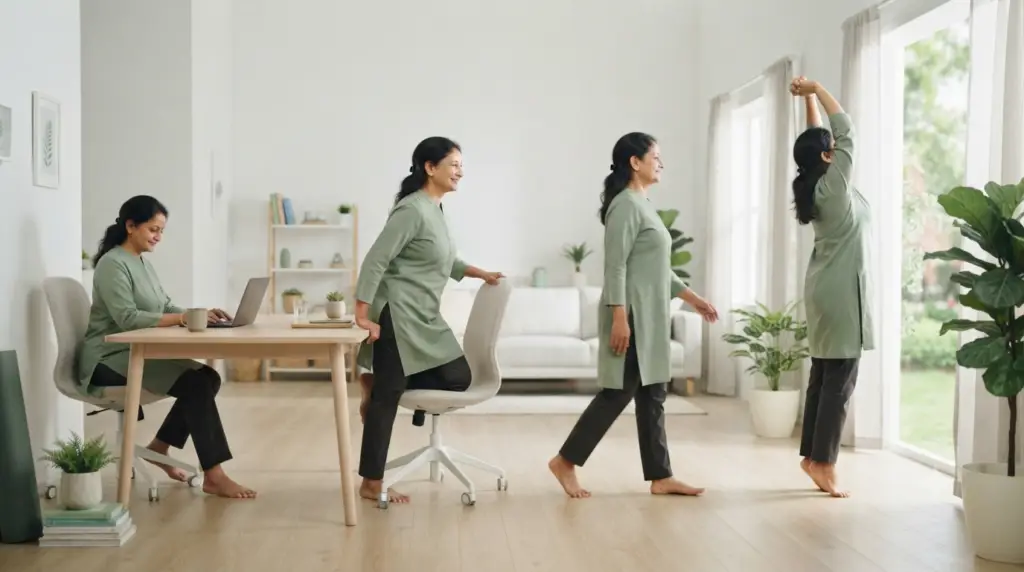
SIT → STAND → MOVE → REPEAT
Whenever you’ve been sitting for a long period, look for a safe opportunity to stand up, stretch, walk, or change your position.
Small actions repeated throughout the day can make movement a natural part of your routine.
Sitting is not automatically bad.
The bigger concern is sitting for long periods with very little movement throughout the day.
Prolonged sedentary time can contribute to muscle inactivity, stiffness, poor posture, and lower overall daily activity, and higher sedentary time has been associated with several long-term health risks.
The solution doesn’t have to be complicated.
Move more. Sit less. Break up long periods of sitting. Exercise regularly.
Even simple everyday habits—such as standing up, walking during breaks, taking the stairs, and doing household activities—can help you build more movement into your day.
Make Movement Part of Your Everyday Life
Your body was designed to move.
You don’t have to completely change your lifestyle overnight. Start with small habits that you can realistically maintain.
Stand up. Take a walk. Stretch. Keep moving.
THE ETERNAL FACTS
Learn Today. Live Better Tomorrow.
Disclaimer
This article is intended for general health awareness and educational purposes. It is not a substitute for professional medical advice, diagnosis, or treatment.
If you experience persistent pain, swelling, numbness, weakness, dizziness, or other concerning symptoms, speak with a qualified healthcare professional.