
By eternal love
Ragi, also called finger millet, is a gluten-free grain that is especially rich in calcium and fiber compared with common grains like rice and wheat. Eaten regularly as part of a balanced diet, it can be a nutritious addition to Indian meals. It is a healthy food, not a cure for any disease.
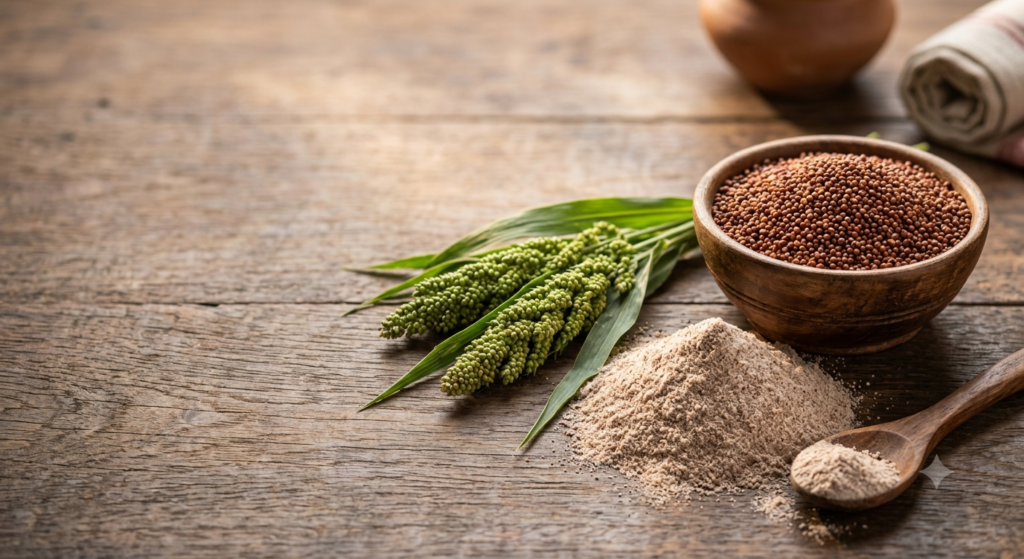
Ragi is known by many names across India: nachni in Maharashtra, mandua in the north, kezhvaragu in Tamil Nadu and ragulu in Telugu-speaking regions. It has been grown here for thousands of years, and it is now back in kitchens and cafes. This guide covers the main ragi benefits, how it compares with other grains, who should be careful, and simple ways to cook it. If you are new to millets in general, start with our guide to the health benefits of millets.
What is ragi (finger millet)?
Ragi is the small, reddish-brown grain of the finger millet plant. It is one of the major millets grown in India, along with bajra (pearl millet) and jowar (sorghum). It grows well in dry regions with little water, which is why it has long been a staple for farming communities across Karnataka, Tamil Nadu, Andhra Pradesh, Maharashtra and Uttarakhand.
The grain is usually ground into a flour (ragi atta). That flour is used for rotis, dosas, porridge, malt drinks and the traditional ragi mudde of Karnataka.
Ragi benefits at a glance
1. One of the richest grain sources of calcium
Compared with rice and wheat, ragi contains several times more calcium. Calcium supports strong bones and teeth. This makes ragi a useful part of the diet for children, teenagers and adults, especially people who eat little or no dairy.
2. Good source of dietary fiber
The fiber in ragi supports digestion, helps you feel full for longer and keeps bowel movements regular. Using whole ragi flour, rather than a refined mix, keeps more of this fiber.
3. Provides iron and other minerals
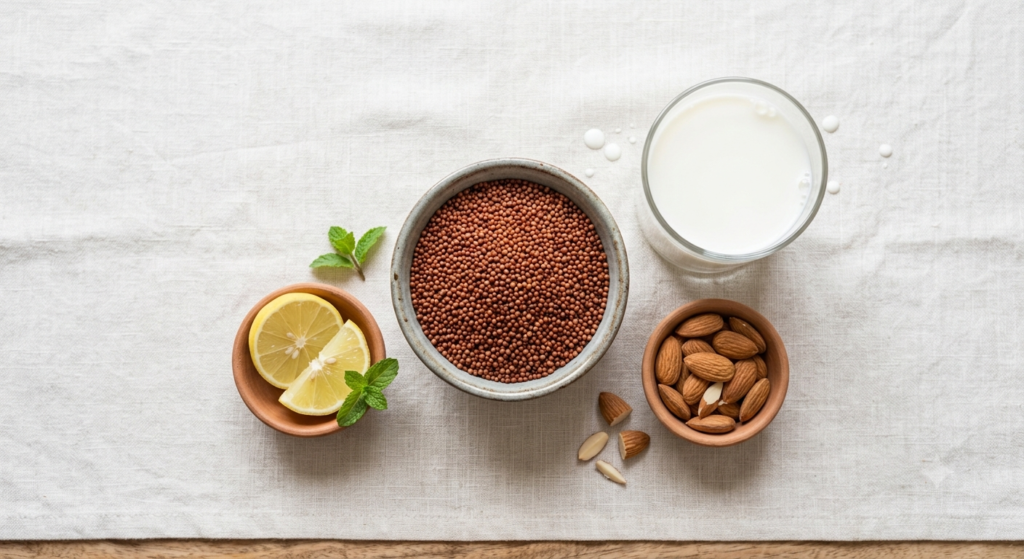
Ragi contains iron, magnesium and phosphorus. Iron needs vary by person, and ragi alone will not treat anemia. Pairing ragi with vitamin C foods, such as lemon, amla or tomato, helps your body absorb the iron better.
4. Naturally gluten-free
Ragi does not contain gluten, so it is a useful grain for people who must avoid wheat, barley and rye. If you have celiac disease, check that the flour was not milled alongside wheat.
5. May help with steadier blood sugar
Ragi generally has a lower glycemic index than polished rice, which means it tends to raise blood sugar more slowly. The evidence is promising but not conclusive, and the effect depends on how it is cooked. If you have diabetes, ragi can be part of your meals, but it should never replace your medicine or your doctor’s advice.
Contains plant compounds
Ragi contains polyphenols, which are plant compounds studied for their possible health effects. Research on this is still developing, so treat it as a bonus, not a promise.
How does ragi compare with rice and wheat?
| Feature | Ragi | Polished white rice | Refined wheat flour |
|---|---|---|---|
| Calcium | Much higher | Low | Low |
| Fiber | Higher | Low | Lower |
| Gluten | None | None | Contains gluten |
| Taste | Earthy, slightly nutty | Mild | Mild |
This table shows general trends. Exact values vary with the variety and how the grain is milled, so for precise numbers see the Indian Food Composition Tables listed in the sources below.
Easy ways to eat ragi
You do not need to change your whole diet. Start with one or two of these:
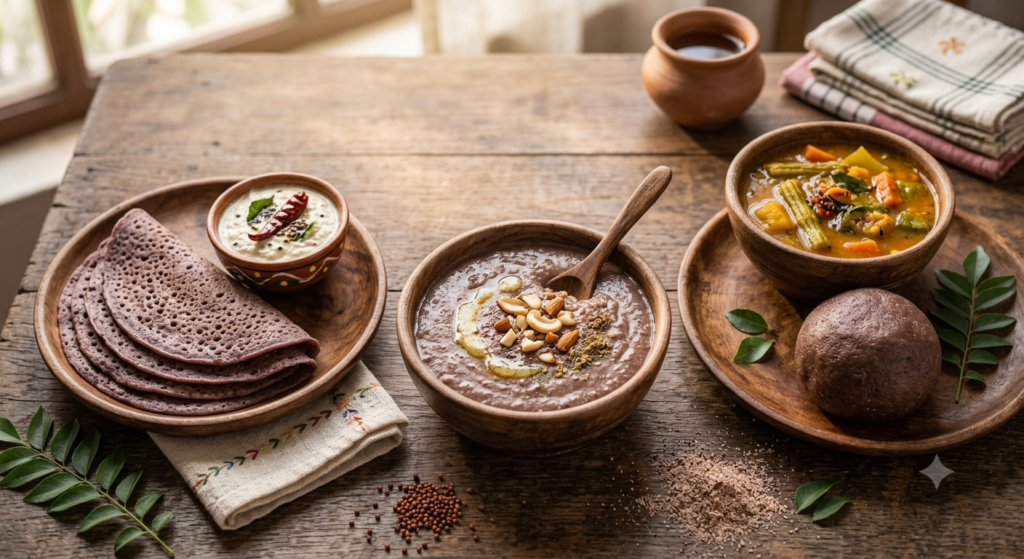
- Ragi porridge or ragi malt. A traditional breakfast, cooked with water or milk and lightly sweetened or salted.
- Ragi dosa or idli. Mix ragi flour with your usual batter for extra nutrition.
- Ragi roti. Blend ragi flour with wheat flour at first, then increase the ragi slowly.
- Ragi mudde. A soft, filling ball from Karnataka, usually eaten with sambar or greens.
- Ragi in baking. Add a portion of ragi flour to pancakes, cookies or cakes.
Tips that help:
- Sprouting or fermenting ragi, for example in dosa or idli batter, can improve how well your body absorbs its minerals.
- Store the flour in a cool, dry place. Ragi flour can turn bitter if kept too long, so buy in small amounts.
- Add ragi gradually, since the extra fiber can cause gas if your body is not used to it. Drink enough water.
Is ragi safe for babies and children?
Ragi porridge is a traditional first food in many Indian homes. If your baby is over 6 months and ready for solid foods, your child’s doctor can advise when and how to introduce it. Do not give added salt or sugar to babies, and do not rely on one food. A variety of foods is better for growing children.
Ragi benefits and side effects: who should be careful
Ragi is safe for most people, but speak with your doctor or a dietitian first if you:
- have a thyroid condition, because millets contain natural compounds that can affect thyroid function when eaten in very large amounts
- have kidney problems or a history of kidney stones, because ragi contains oxalates and minerals that may matter for you
- have diabetes and take medicine, so your plan can be adjusted
- have digestive problems that get worse with high-fiber food
Frequently asked questions
Is ragi good for health?
Yes, for most people. It is rich in calcium and fiber, gluten-free and easy to add to Indian meals. As with any food, it works best as part of a varied, balanced diet.
Can I eat ragi every day?
Many people do. A sensible approach is to rotate ragi with other millets and grains during the week rather than relying on one grain.
Is ragi good for weight loss?
Ragi can help you feel full because of its fiber, but no single food causes weight loss. Portion size, your overall diet and activity matter most.
Is ragi better than rice?
Ragi has more calcium and fiber than polished white rice and a lower glycemic index. A balanced diet that includes both is fine, since variety matters more than any one grain.
Does ragi have protein?
It contains moderate protein. Eat it with dal, curd, eggs or vegetables for a more complete meal.
What is the best time to eat ragi?
Breakfast or lunch works well for most people. There is no special time, so choose when it fits your routine.
The bottom line
Ragi benefits are real, especially the calcium and fiber. Ragi is a nutritious, traditional grain with real benefits, especially its calcium and fiber. Try swapping one meal a week for ragi porridge, dosa or roti, and build up slowly. It works best as part of a balanced diet, not as a miracle food.
Want to explore more millets? Read our guide to the health benefits of millets.
This article is for general information only and is not medical advice. If you have a health condition, please speak with a qualified doctor or dietitian before changing your diet.
Sources
- ICAR-IIMR, “Nutritional value of millets,” Indian Farming, 2023
- ICMR-National Institute of Nutrition, Indian Food Composition Tables 2017
- Frontiers in Nutrition (2024), review on the nutritional profile and health value of millets

Hi, I’m Eternal Love, the writer behind THE ETERNAL FACTS. I have an MSc in Biotechnology, and I enjoy reading and writing about health. I’m not a doctor or a dietitian. I research each topic using trusted sources such as the World Health Organization and link them at the end of every article. This information is for general awareness and doesn’t replace advice from a qualified healthcare professional.